
Pumping Breast Milk: What Helps, What Doesn't, and What to Expect
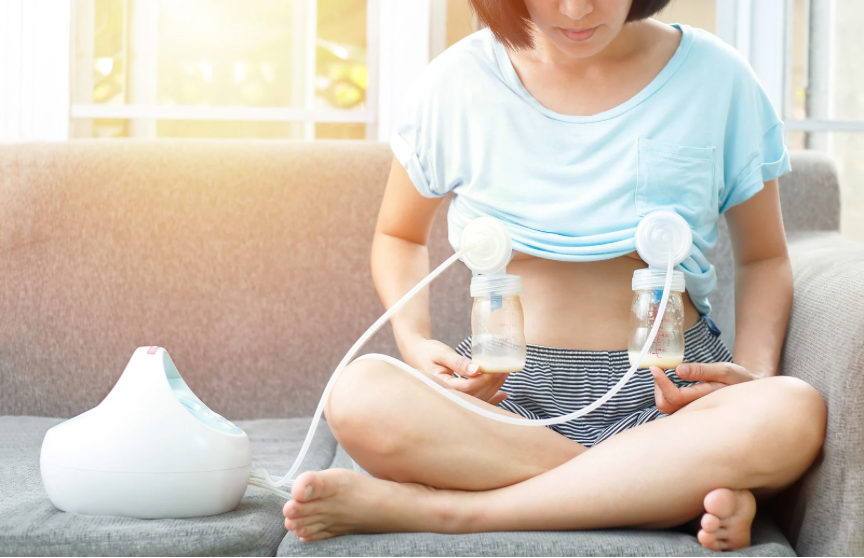
If you have read my post on hand expressing breast milk, you will already know that hand expressing is a skill every breastfeeding mother should have. This post is about the next step — using a breast pump, when it helps, and how to get the most from it.
As an IBCLC based in Listowel, Co. Kerry, I work with mothers on pumping and expressing regularly — and it is one of the areas where a small amount of the right guidance makes a very big difference.
Pumping is widely used but not always well understood. Many mothers pump more than they need to, or feel they are doing something wrong when they pump less than they expected. This post aims to give you a realistic picture — what pumping can and cannot do, and how to use it effectively.
Do I Need a Breast Pump?
Not every breastfeeding mother needs a pump. If breastfeeding is going well, your baby is gaining weight, and you are not planning to be separated from your baby, you may not need one at all — at least not in the early weeks. Pumping is most useful when:
Pumping is most useful when:
Your baby is not yet able to feed directly at the breast
You and your baby are separated after birth — for example if your baby has been admitted to a special care nursery or neonatal intensive care unit (NICU)
You need to build or protect your supply
You are returning to work and need to express milk during the working day
You want to leave expressed milk for a feed when you are away from your baby
You are combination feeding and want to maintain your supply alongside formula feeds
How to Choose a Breast Pump for Breastfeeding
Pumps fall into four broad types:
Manual pumps are hand-operated and generally the most affordable. They work well for occasional use but can be tiring if you are pumping frequently.
Single electric pumps pump one breast at a time. They are more efficient than manual pumps and suit mothers who pump occasionally.
Double electric pumps pump both breasts simultaneously, saving time and often yielding more milk. They are the most practical choice for mothers who are pumping regularly or returning to work.
Hospital-grade pumps have stronger, more efficient motors and are built for multiple users. They are the most effective option and are particularly useful in the early days if your baby cannot latch, or if supply needs to be established from scratch. Hospital-grade pumps can sometimes be hired from your maternity hospital — it is worth asking.
No single pump suits every mother. What matters most is that the pump is comfortable, has variable suction and speed settings, and comes with a range of flange sizes. Pumping should never be painful.
Breast Pump Flange Fit: Why Size Matters
The flange is the funnel-shaped part of the pump that sits against your breast. Getting the right size is one of the most important — and most commonly overlooked — factors in pumping effectively.
Research confirms that correctly fitted flanges increase breast milk yield, reduce discomfort, and can reduce the risk of developing mastitis. Despite this, flange sizing guidance from pump manufacturers has not always been accurate, and many mothers are still routinely given flanges that are too large.
A 2025 study in the Journal of Human Lactation found that smaller flange sizes based on nipple tip measurement led to significantly higher self-reported comfort and, on average, more milk output per pumping session compared to standard sizing. The most common sizes used by participants were 15mm and 17mm — considerably smaller than the 21mm flanges that most pump manufacturers have traditionally recommended as standard.
Signs your flange may be the wrong size:
Pumping is uncomfortable or painful
Your nipple is rubbing against the sides of the tunnel
Your areola is being pulled significantly into the tunnel
You are getting less milk than expected despite pumping frequently
Signs your flange is the correct size:
Your nipple moves freely in the tunnel without rubbing against the sides
Little or no areola is drawn into the tunnel during pumping
Pumping is comfortable — you may feel a drawing sensation but no pain or pinching
Milk flows well and your breast feels lighter after pumping
There is no redness, swelling, or marks on your nipple or areola after a session
Getting flange fit right can make a significant difference to both comfort and output. If you are unsure whether your flange fits correctly, this is something an IBCLC can assess as part of a Focused Support Session.
How to find the right fit:
The Flange FITS™ method, developed by IBCLC Jeanette Mesite Frem, involves starting with a flange size equal to your nipple tip diameter — measured before stimulation — and then trying one size smaller and one size larger to identify the most comfortable and effective option. This is a more reliable approach than simply adding several millimetres to your nipple diameter as older guidance suggested.
If you are struggling with flange fit, an IBCLC can assess this as part of a consultation. It is worth getting right — a poorly fitted flange makes pumping harder, less comfortable, and less productive.
When Should I Start Pumping?
If your baby is feeding well at the breast, there is no need to start pumping straight away. Introducing a pump too early — particularly in the first two to four weeks — can complicate supply regulation and lead to oversupply.
If you are returning to work and want to build a small supply of expressed milk, starting to pump once a day in the morning from around four to six weeks is a reasonable approach. Milk volumes tend to be highest in the morning, making this a practical time for most mothers.
If your baby cannot latch after birth or is separated from you , start pumping as soon as possible — ideally within the first hour, and certainly within six hours. Combining hand expressing with pumping in the early days gives the best results for establishing supply.
How Often Should I Pump?
This depends entirely on why you are pumping:
To build or protect supply when your baby is not feeding at the breast: aim for at least eight to ten pumping sessions in twenty-four hours, including at least one overnight session. This mimics a newborn's natural feeding pattern and gives your body the signals it needs to establish a full supply.
To supplement breastfeeding when supply is low: pumping after as many breastfeeds as possible — six to eight times per day — sends additional signals to produce more milk. Even if very little milk comes out after a feed, the stimulation still matters.
For occasional use alongside breastfeeding: once or twice a day is sufficient for most mothers who are building a small supply of stored milk.
When returning to work: pump as often as your baby would normally feed during the hours you are away. For most mothers this means two to three sessions during the working day.
How Long Should I Pump?
Pumping time varies between mothers and depends on breast storage capacity, the type of pump used, and the reason for pumping. Rather than watching the clock, the better guide is to watch how milk flows and how your breasts feel during and after a session.
That said, a useful starting point is fifteen minutes when double pumping — pumping both breasts simultaneously. Research on mothers of preterm babies found that double pumping sessions incorporating hands-on technique averaged around twenty-five minutes, with a range from fifteen to forty-five minutes depending on the individual mother.
Double pumping is generally more effective than single pumping — it saves time, can yield more milk, and research supports it as the better approach for mothers who are pumping regularly. If you are single pumping, alternating between breasts every five minutes and repeating is the next best approach.
The goal is not to reach a fixed time but to pump long enough that milk flow has slowed significantly and your breasts feel lighter. Every mother is different — some will find fifteen minutes is sufficient, others will need longer.
What Is Hands-On Pumping and Why Does It Matter?
Hands-on pumping means using your hands to gently massage and compress the breasts before and during pumping. Research by Jane Morton at Stanford University found that combining hand techniques with electric pumping increased daily milk volume by close to fifty percent in mothers of premature babies. It also increased the calorie content of the milk — an important finding for any baby, not just premature ones.
To use hands-on pumping:
Before you begin, gently stroke and compress the breast with warm hands to help trigger the let-down
During pumping, use gentle compression around the breast — not pressing hard, but a light, sweeping touch similar to applying cream to the skin
When milk flow slows, stop the pump and hand express from both breasts alternately
Then return to the pump for a final short session
Important: deep, vigorous massage is not recommended and can cause bruising and breast inflammation. The touch should always be gentle.
What Is Power Pumping and When Should I Try It?
Power pumping is a short-term technique designed to mimic a baby cluster feeding and give supply a boost. One approach is to pump for twenty minutes, rest for ten, pump for ten, rest for ten, and pump for ten — all within one hour. Repeating this once a day for two to three days can help to increase supply when things have stalled.
Power pumping is a useful short-term strategy but is not a substitute for addressing the underlying cause of low supply.
Tips to Help Your Milk Let Down When Pumping
Some mothers find it harder to let down to a pump than to a baby. Things that can help:
Warmth — a warm cloth applied to the breast before pumping, or pumping in a warm shower
Skin-to-skin contact with your baby before or during pumping
Looking at a photo of your baby or holding an item of their clothing
Establishing a consistent pumping routine — the same place, the same time, even the same music — so that the let-down becomes conditioned to that routine
Covering the collection bottle so you are not watching the volume
Ensuring the pump suction is set at the highest comfortable level — not painful, but firm enough to be effective
How to Store Expressed Breast Milk Safely
General guidance for storing expressed breast milk at home:
At room temperature: up to four hours
In the fridge (back of fridge, 4°C or below): up to five days
In a separate freezer (−18°C or below): up to six months
Defrosting frozen breast milk:
Defrost frozen breast milk in the fridge — this takes around twelve hours. Once fully thawed, use within twenty-four hours. You can also defrost by holding the bag or bottle under lukewarm running water (no more than 37°C). Never use a microwave to defrost or heat breast milk as it destroys nutrients and creates hot spots that can burn your baby's mouth.
Once a feed has started:
Any breast milk that has been warmed or brought to room temperature must be used within two hours. Any milk remaining after this must be discarded — do not return it to the fridge or reheat it.
Do not refreeze thawed milk.
Always label expressed milk with the date and time. Use the oldest milk first.
For full guidance on storage see the HSE: Storing Expressed Breast Milk and HSE: Heating Expressed Breast Milk.
How to Clean Breast Pump Parts
Current guidance distinguishes between healthy full-term babies and babies who are premature or unwell.
For a healthy, full-term baby: the HSE advises washing all pump parts that come into contact with breast milk in hot soapy water after each use and leaving them to air dry or drying with paper towels. The Academy of Breastfeeding Medicine also states that sterilising pump parts after every use is not necessary for healthy full-term babies — thorough washing and drying is sufficient. Some manufacturers recommend sterilising storage containers once a day, which is a reasonable precaution.
For a premature or sick baby: the HSE advises sterilising the expressing set after each use. If your baby is in a neonatal unit, the unit will guide you on their specific protocol.
Parts that do not come into contact with milk — such as tubing — should not be boiled or placed in a steriliser as they can melt or be damaged. Follow the manufacturer's instructions for these.
Exclusively Pumping Breast Milk: What You Need to Know
Some mothers pump exclusively — either by choice or because direct breastfeeding has not worked out. Exclusively pumping is entirely possible but requires commitment, a consistent schedule, and good support. If you are exclusively pumping, getting a full assessment from an IBCLC is strongly recommended to ensure your schedule, flange fit, and technique are right for your individual situation.
When Pumping Alone Will Not Fix the Problem
It is worth saying clearly: pumping is a tool, not a solution. If supply is genuinely low, pumping more will not fix the problem if the underlying cause has not been addressed. If your baby is not gaining weight, if feeding is painful, or if you have concerns about supply, please get a proper assessment rather than simply adding more pumping sessions.
Breastfeeding and Pumping Support in Kerry and Online
I offer breastfeeding and expressing consultations at my clinic in Listowel, Co. Kerry, home visits across North varies, and online consultations for families nationwide. If you have questions about pumping, flange fit, or expressing alongside breastfeeding, I am happy to help. You can also contact me at info@bobbidaly.ie
If you have a specific pumping question — flange fit, output concerns, returning to work, or establishing a pumping routine — a Focused Support Session may be exactly what you need. These shorter, targeted appointments are designed for mothers who have a particular issue to work through rather than needing a full consultation.
Book a Focused Support Session →
