
Starting Solids at Six Months: What You Need to Know About Weaning
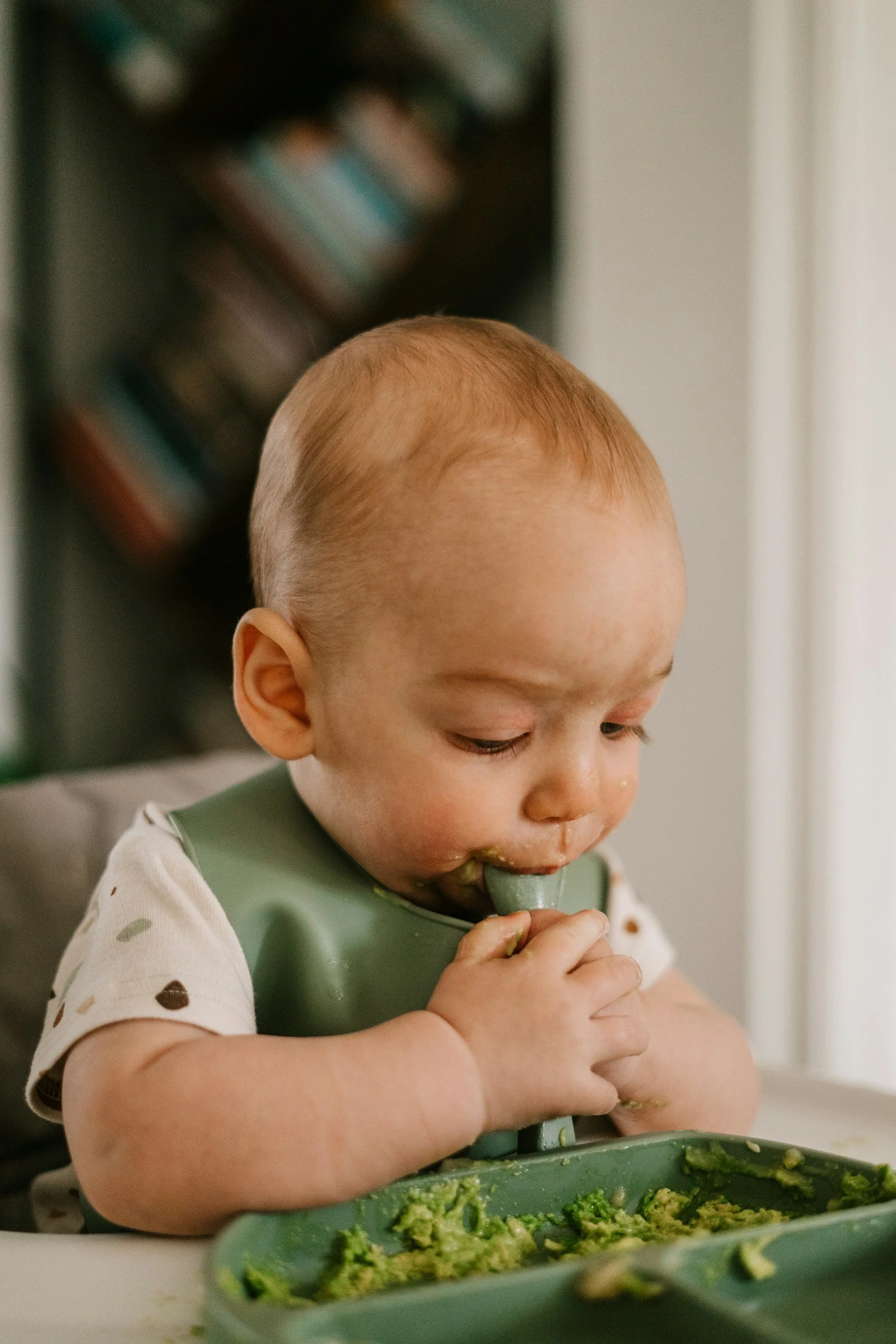
If you are approaching the six-month mark with your baby, you are probably starting to think about weaning — or being asked about it by everyone around you. Solid food feels like a big step, and there is no shortage of advice out there, not all of it accurate.
This post covers what the current guidance actually says, how to know when your baby is genuinely ready, how to approach those first foods, and how breastfeeding fits alongside solids as your baby grows. I have also included a note on a few things parents are commonly told that are worth examining a little more closely.
What Does Weaning Actually Mean?
Weaning refers to the introduction of solid food alongside breast milk or formula — not the end of breastfeeding. The two things are not the same. The HSE recommends continuing to breastfeed after solid foods are introduced, up to two years or beyond. Starting solids is the beginning of a new chapter!
When Should I Start Solids?
The HSE recommends that weaning should start when your baby is around six months old, and that solid food should not be introduced before 17 weeks (four months). This applies whether your baby is breastfed or formula fed.
The reason timing matters is developmental. A baby's digestive system, kidneys, and immune system are still maturing in the early months. Starting solids too soon may increase the risk of infections and allergies, and can displace the breast milk or formula that your baby still needs as their primary nutrition.
Six months is a guide, not a precise deadline. What matters alongside age is readiness — and the two do not always arrive at exactly the same time.
How Do I Know If My Baby Is Ready?
There are three signs to look for, and your baby needs to show all three — not just one or two:
They can sit up with minimal support and hold their head steady. A baby who cannot hold their head up cannot manage food safely.
They have lost the tongue thrust reflex. Young babies automatically push things out of their mouth with their tongue — this is a protective reflex. When it fades, they are better able to move food around and swallow it.
They can pick up food and bring it to their mouth. This is the clearest sign of developmental readiness. If your baby cannot coordinate reaching, grasping, and bringing food to their mouth, their digestive system is likely not ready either.
These signs tend to appear together around six months.
"But My Baby Seems Hungry — Should I Start Earlier?"
This is one of the most common reasons parents start solids before six months, and it is worth thinking through carefully.
Around three to four months, many babies go through a growth spurt and start feeding more often, waking more at night, and chewing their fists. This can look like hunger. It is usually a normal developmental phase — and the right response is to offer more milk feeds, not solid food.
The HSE is clear that if your baby seems hungrier before six months, additional milk feeds should be offered rather than introducing solids early.
If you are genuinely concerned that your baby is not getting enough milk, that is worth getting assessed — by your public health nurse, GP, or a lactation consultant — rather than moving to solids before your baby's system is ready for them.
What About Starting Solids to Help My Baby Sleep?
This one comes up constantly, and I want to address it honestly because it is so widely believed.
The idea that a full stomach means a sleeping baby is understandable. But the evidence does not support it. Night waking in babies is normal and developmental — it is not a problem that solid food can fix.
What we know is that starting solids early, particularly before four months, can actually disrupt sleep rather than improve it, because the digestive system is simply not ready to handle food efficiently. A baby who is uncomfortable after eating is not going to sleep better.
For breastfeeding mothers, there is an additional consideration. If early solids reduce night feeding, this can affect milk supply at a time when it is still being established. Night feeds are important for maintaining supply, particularly in the early months.
The honest answer is: when your baby starts sleeping longer stretches, it is most likely because they are developmentally ready to do so — not because of what is in their stomach. If sleep is a significant concern, it is worth talking to your public health nurse or GP rather than reaching for solid food as a solution before your baby is ready.
Spoon Feeding or Baby-Led Weaning — Which Is Better?
The HSE is clear that there is no right or wrong way — some parents prefer baby-led weaning, some prefer spoon feeding, and many do a combination of both. What matters is that your baby eats a varied diet and gets the nutrients they need.
Spoon feeding involves offering purées and soft foods on a spoon, with you controlling the pace of the feed. It works well for many families, particularly in the early weeks of weaning.
Baby-led weaning means offering soft finger foods and letting your baby feed themselves from the start, following their own pace and appetite. It encourages independence around food and may support a healthier relationship with eating in the longer term. Research suggests there is no greater risk of choking with baby-led weaning than with spoon feeding, when done appropriately.
Many families end up doing both — offering spoon feeds for some meals and finger foods for others. There is no rule that says you have to pick one approach and stick to it.
What Are Good First Foods?
By around six months, your baby can begin to try the same healthy foods as the rest of the family, with a few exceptions. Good first foods include:
Soft cooked vegetables: carrot, sweet potato, parsnip, broccoli
Soft fruit: banana, pear, avocado, cooked apple
Soft cooked meat and fish
Well-cooked eggs
Soft cooked lentils and legumes
Foods to avoid in the first year include honey (risk of botulism), whole nuts (choking risk), added salt and sugar, and cows' milk as a main drink — though it can be used in cooking from six months.
Introducing Allergens — What the Current Guidance Says
Advice on allergens has changed significantly in recent years. Parents were once told to avoid common allergens early on. We now know the opposite is true — early introduction helps prevent allergy from developing, not the other way around.
The HSE currently advises introducing all of the most common food allergens as soon as you start weaning, usually at around six months. Food allergies are more likely to develop if you delay introducing foods such as dairy, egg, and peanut.
Introduce allergens one at a time in small amounts, wait a couple of days before trying another, and once introduced keep offering them regularly. Stopping after the first introduction is not enough — regular exposure is what builds tolerance.
If your baby's sibling has a food allergy, you can still introduce those allergens — do not avoid them out of caution. However, if your baby has moderate to severe eczema or an existing allergy, speak to your GP before introducing allergens as they may need supervised introduction.
How Does Breastfeeding Fit In Once Solids Start?
Starting solids does not mean stopping breastfeeding. The two go together.
In the early weeks of weaning, your baby will not be eating very much. Solid food is about exploring tastes and textures, not replacing milk. Breast milk — or formula — remains the main source of nutrition through most of the first year, with solids gradually taking on a bigger role.
A useful guide is to offer solid food and then follow with a milk feed, so your baby is not too hungry or too full to engage with new foods. As weaning progresses and your baby is eating more, the balance naturally shifts.
Breastfeeding does not need to stop at six months, twelve months, or any particular point. The WHO recommends continuing alongside solids to two years and beyond. Many mothers continue well past this, and breast milk continues to offer nutritional and immune benefits for as long as you both choose to breastfeed.
A Note on Advice You Might Hear
Weaning is one of those topics where well-meaning advice can come from everywhere — family, friends, online groups, and sometimes healthcare providers with varying levels of up-to-date knowledge. Some things you may be told that are worth treating with caution:
"Start a bit of baby rice at four months and they'll sleep better." Night waking is developmental, not a hunger problem that solid food can fix. Starting before 17 weeks goes against current HSE guidance.
"Your baby is big — they need solids earlier." Bigger babies are not necessarily ready for solids earlier. The signs of readiness are developmental, not size-based.
"Baby-led weaning is dangerous — they'll choke." Research does not support this. The risk of choking is similar whether a baby is spoon fed or self-feeding, provided appropriate foods are offered.
"Once they're on solids you should cut back on breastfeeds." This is not current guidance. Breast milk remains important throughout the first year and beyond. Follow your baby's lead.
Getting Support With Weaning in Kerry and Online
Starting solids is an exciting stage, and for most families it goes smoothly once they know the signs of readiness and take things at their baby's pace. If you have questions about weaning alongside breastfeeding — including how to protect your milk supply as your baby eats more — I am happy to help.
I offer consultations at my clinic in Listowel, Co. Kerry, home visits across North Kerry, and online consultations for families nationwide.
Book a free introductory call →
Key Sources
HSE Starting Your Baby on Solid Foods: https://www2.hse.ie/babies-children/weaning-eating/weaning/solid-foods/
HSE: Weaning Tips: https://www2.hse.ie/babies-children/weaning-eating/weaning/tips/
HSE: Allergies and Weaning: https://www2.hse.ie/babies-children/weaning-eating/weaning/allergies/
WHO: Complementary Feeding: https://www.who.int/health-topics/complementary-feeding
Breastfeeding Support: Starting Solid Foods: https://breastfeeding.support/starting-solid-foods/
Fangupo et al. (2016). Baby-led approach to eating solids and risk of choking. Pediatrics: https://pubmed.ncbi.nlm.nih.gov/27647715/
